Ghost Servers: Excavating the Cursed Lore of Discord Communities That No Longer Exist
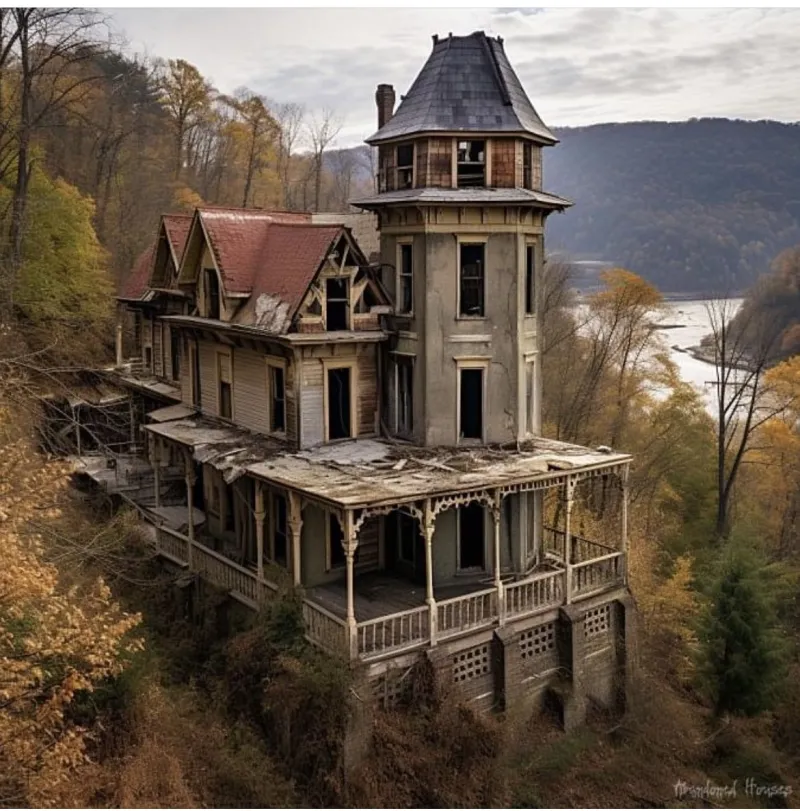
Photo: abandoned dark computer server room with glowing screens, via i.pinimg.com
Imagine a library where every book is a collection of inside jokes you'll never understand, drama you weren't there for, and memes so hyperspecific they only made sense to eleven people in a voice channel at 2 a.m. on a Tuesday in 2019. Now imagine someone burned that library down. That's what happens every time a Discord server dies.
And they die constantly.
Discord currently hosts somewhere north of 500 million registered users across millions of active servers. The ones you've heard of — the gaming hubs, the massive fan communities, the subreddit overflow servers — those are the icebergs. Beneath the surface are the weird ones. The tiny ones. The ones that lasted four months, peaked at 34 members, developed their own mythology, and then collapsed overnight because the admin got a girlfriend and stopped logging on.
Those are the servers worth talking about.
The Archaeology Problem
Here's what makes dead Discord servers uniquely tragic compared to other defunct internet spaces: there's almost no official record. When a GeoCities page died, the Wayback Machine might have caught it. When a forum went dark, threads could linger in Google's cache. Discord doesn't work that way. When a server gets deleted — or simply abandoned until the owner nukes it — the content evaporates. Channels, pinned messages, custom emoji, the elaborate bots someone spent three weeks configuring: gone.
What survives lives in screenshots. Specifically, the screenshots that members happened to save because something was funny or unhinged enough to warrant it in the moment.
"It's like trying to reconstruct a civilization from pottery shards," says one archival hobbyist who goes by Pellucid_Wreck online and runs a small Tumblr dedicated to documenting lore from servers he was personally a member of. "Except the pottery shards are screenshots of someone's avatar saying something deeply unhinged about the Bee Movie." He's been at it since 2020, and his archive currently spans documentation from eleven different defunct servers, complete with timelines, member rosters reconstructed from memory, and what he calls "incident reports" — write-ups of specific moments of drama or absurdity that defined a server's culture.
It's an oddly moving project when you dig into it.
What Even Is Server Lore?
Every long-running Discord server develops lore whether it means to or not. Lore is just the accumulated weight of shared experience — the injokes that require a paragraph of backstory to explain, the legendary incidents that get referenced for months after they happen, the members who achieved mythological status for reasons that don't translate outside the community.
In bigger servers, lore is documented obsessively in wikis and pinned channels. In smaller servers — the weird ones — it exists almost entirely in collective memory. Which means when the server dies, a huge portion of it goes with the people who leave.
Pellucid_Wreck walked us through one example from his archive: a 60-person server originally built around a very specific strain of absurdist meme format that had a roughly three-week lifespan on Twitter in 2018. The server outlived the meme by about fourteen months, gradually evolving into something entirely different — part ARG (alternate reality game), part collaborative fiction project, part chaotic social experiment. By the end, members were maintaining elaborate fictional personas, contributing to a shared document that functioned as a kind of collectively authored novel, and operating under a set of community rules that had been modified so many times they were essentially unrecognizable from the original.
"Nobody outside that server knew any of it was happening," he says. "It was completely self-contained. And then one day the admin just... left. Posted a goodbye message and deleted the server. The document got deleted too because it was on a shared account. Fourteen months of work, just gone."
He managed to reconstruct a rough outline from about 200 screenshots spread across six former members' phones.
The ARG Graveyard
If standard server lore is archaeology, defunct ARG servers are something closer to forensic reconstruction. Alternate reality games — interactive narratives where players solve puzzles and follow clues across multiple real-world platforms — were a genuine internet phenomenon in the 2010s, and Discord became a primary hub for coordinating them. The problem is that small-scale, community-run ARGs are incredibly fragile. When the creator loses interest or the playerbase shrinks below critical mass, they tend to just... stop. No resolution, no explanation, no archive.
This has created a specific type of internet haunting: abandoned ARGs where the puzzles are still technically unsolved because nobody's left to solve them. Or worse, ARGs that were solved but whose solutions exist only in the memories of players who've since scattered.
"There's this whole category of 'solved mysteries that nobody documented,'" explains a Discord user named Throckmorton_B, who moderates a small community dedicated to cataloguing defunct ARGs. "Someone cracked something genuinely elaborate, everyone celebrated in the server, and then the server died six weeks later and now there's no record that the solution ever existed. The puzzle still looks unsolved to anyone who stumbles across the surface-level content."
He estimates his community has documented fragments of over 40 abandoned ARGs, the majority of which have fewer than a dozen people in the world who remember they existed.
Why This Matters (Seriously)
It's easy to frame all of this as a quirky internet niche — obsessives cataloguing digital ephemera for no particular reason. And honestly, that framing isn't entirely wrong. But there's something genuinely significant happening in the margins of it.
Discord communities, especially small ones, function as real social infrastructure for the people inside them. The weird servers — the ones built around hyperspecific interests or bizarre creative projects — often serve as primary communities for people who couldn't find their niche anywhere else. When those servers die, the loss isn't just the content. It's the community itself, dispersed back into the internet with no forwarding address.
Archiving the lore is, in a weird way, archiving proof that those communities existed. That the people in them made something together, even if it was completely inexplicable to anyone outside.
"I save this stuff because it mattered to the people who were there," Pellucid_Wreck says. "Even if it looks like gibberish to everyone else."
Somewhere right now, a 23-person server is developing mythology that will never be documented. A bot is delivering a custom daily message that 23 people find inexplicably hilarious. A pinned message is accumulating context that only makes sense if you were there for the incident in question.
And eventually, almost certainly, it'll be gone.
Save your screenshots.